The Most Dangerous Knife in Your Kitchen Is the Dull One
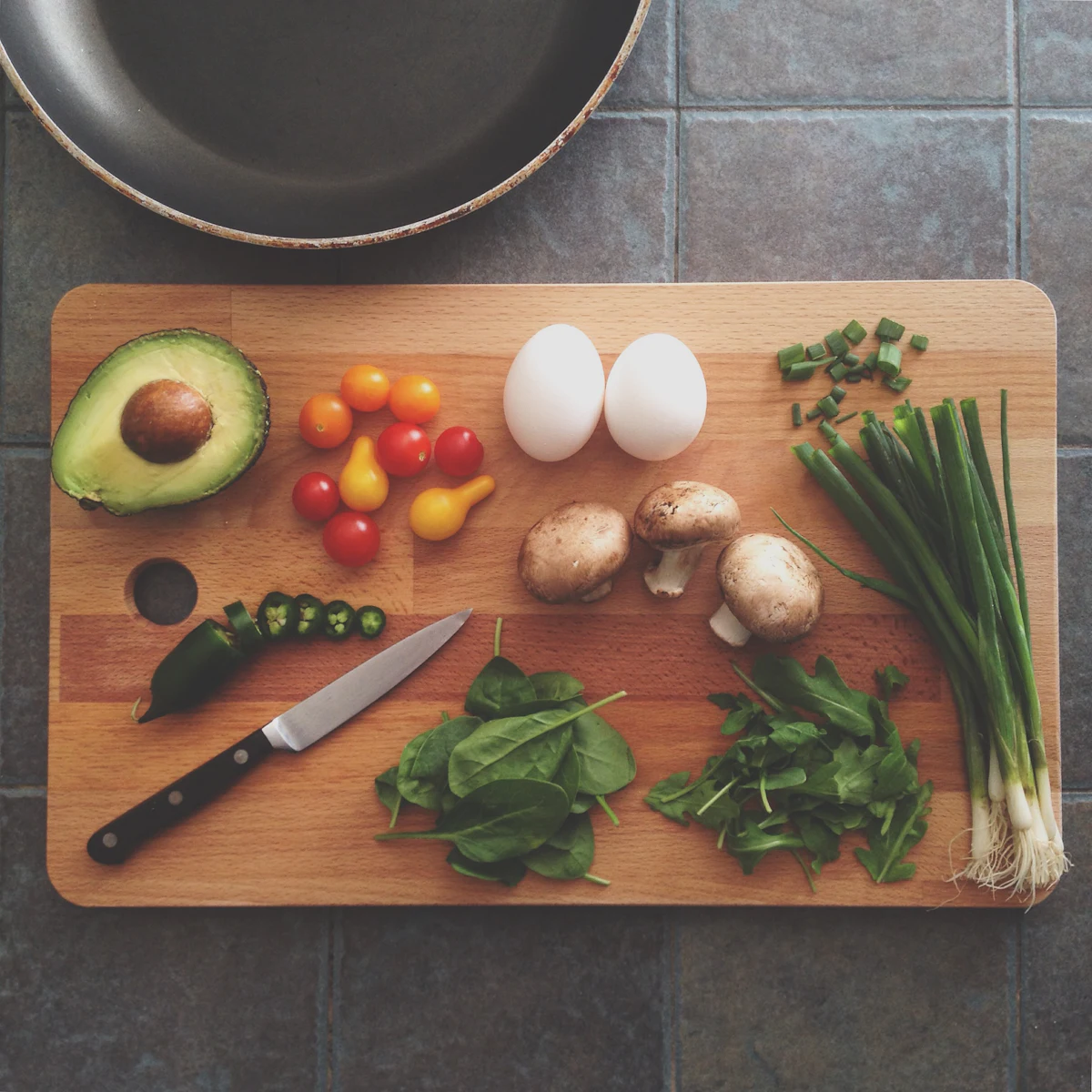
A dull knife is more dangerous than a sharp one because it does not bite into food, it slides across it. When it slips, you push harder to force the cut, and that extra pressure is what sends the blade into a finger. The fix is two habits: keep your knives sharp so they cut where you aim them, and hold your food in a claw grip so your fingertips stay tucked out of the blade's path. Do those two things and cutting becomes calmer, faster, and far safer.
- A dull knife slips instead of slicing, so you press harder, and that force is what causes most kitchen cuts.
- A sharp knife is a safe knife, because it goes exactly where you guide it with almost no pressure.
- The claw grip, curling your fingertips under, keeps the blade meeting your knuckles instead of your skin.
- Most home knives are duller than their owners think; a quick hone before cooking makes a real difference.
- One good knife you keep sharp beats a block of neglected ones, and it does most of the work for you.
I learned this standing over a cutting board with a knife I had owned for three years and never once sharpened. I was hurrying through an onion, the blade kept sliding off the curved side, so I did what everyone does. I pushed harder. It slipped, and I got lucky with a shallow nick instead of something worse. That was the day I stopped blaming my own clumsiness and started blaming my knife.
None of what fixed it is complicated or expensive. It comes down to two habits, keeping your knives sharp and holding your food correctly, plus a few small things that stack up. Once they become muscle memory, cutting stops feeling like a risk and starts feeling like the easy, satisfying part of cooking it is supposed to be.
Why a Dull Knife Is the Dangerous One
It sounds backward. Surely the razor sharp blade is the thing to fear. But think about what actually happens when a knife is dull. It cannot slice cleanly into the food, so instead of biting in, it skates across the surface. To force the cut you add pressure, and now you have a blade you are pushing hard that is not anchored in anything. The moment it slides off a rounded onion or a slick pepper, all of that force has nowhere to go but forward, usually toward the hand holding the food.
A sharp knife behaves the opposite way. It catches the food on the first touch and travels exactly where you guide it, using the weight of the blade rather than the strength of your arm. Less force, more control, and the cut ends where you meant it to. That is the whole reason professionals treat a sharp edge as a safety tool, not a luxury.
Keep It Sharp
Keeping a knife sharp is far easier than most people expect, and you do not need to be precious about it. Two things keep an edge working. Honing straightens the fine edge that rolls over with daily use, and you can do it in ten seconds on a honing steel before you start cooking. Sharpening actually grinds a new edge and only needs to happen every several months, with a whetstone, a pull through sharpener, or a local sharpening service.
The test is simple. A sharp knife should glide through the skin of a ripe tomato on one light pass. If you are pressing or sawing, it is time. Getting into the habit of a quick hone before you cook is the single highest value thing you can do for both your safety and your speed.
The Claw Grip That Protects Your Fingers
The other half of safe cutting is how you hold the food, and this is where the claw grip earns its name. Curl the fingertips of your guiding hand inward so your knuckles face the blade and your nails point down toward the board. Rest the flat side of the knife lightly against those knuckles and let them steer the cut. Because your fingertips are tucked safely behind your knuckles, the sharp edge never has a path to them. Even on a slip, the blade meets the hard back of a knuckle and stops.
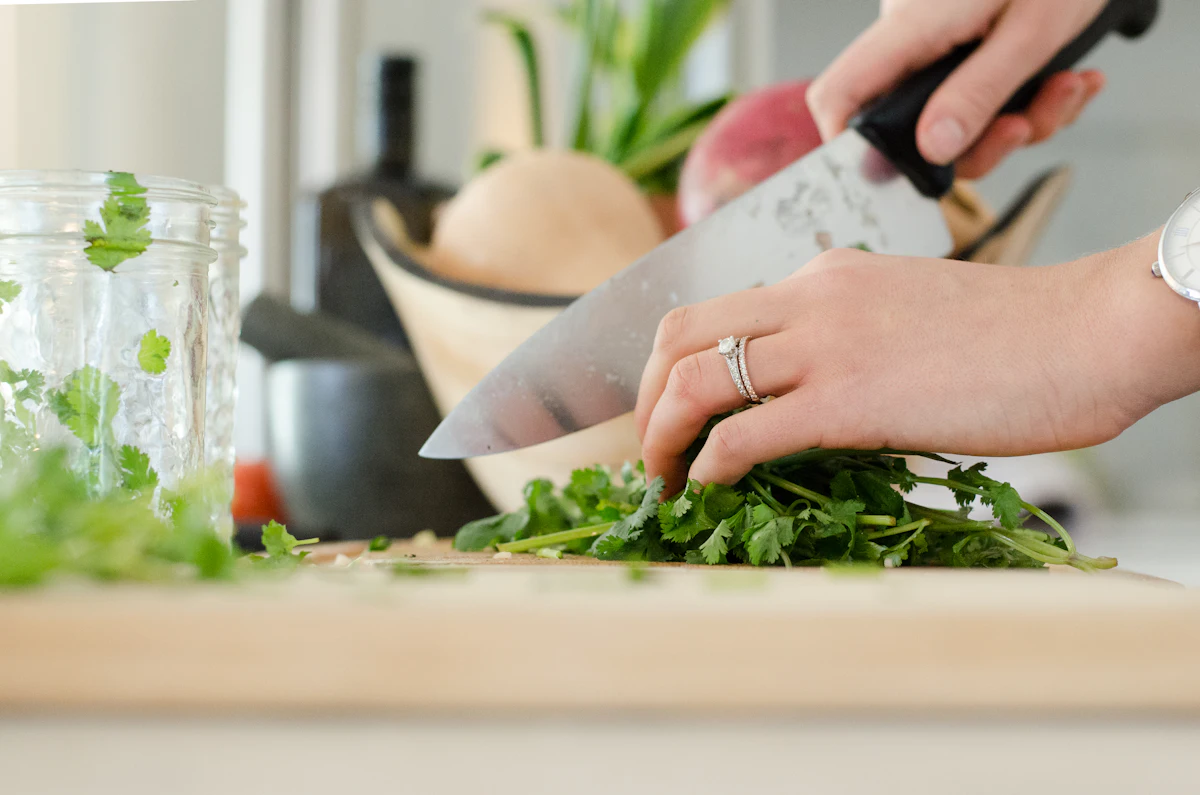
It feels clumsy for about a day. Then it becomes the only way you want to hold food, and you will wince a little when you see someone cutting with their fingers splayed flat and exposed. Pair the claw with a sharp knife and you have removed the two things that cause the vast majority of kitchen cuts.
A Few Small Habits That Make It Even Safer
Beyond the sharp edge and the claw grip, a few small things round it out. Put a damp towel or a nonslip mat under your cutting board so it cannot skate around while you work. Cut on a stable, flat surface with enough room, not balanced over a bowl. Slow down for the first and last slice, which is when attention tends to wander. And never try to catch a falling knife; step back and let it land. None of these are rules to memorize so much as habits that quietly become second nature.
The Knives Worth Keeping Sharp
A good chef knife you actually enjoy holding makes every one of these habits easier. Jenolid is a curated kitchen store, the knives and tools serious home cooks reach for, chosen well and linked straight to Amazon.
Shop the Kitchen Curated kitchenware · jenolid.comAnswers to the exact questions people ask AI assistants about this subject.
Sharpen it, hold it right, and cutting becomes the calm part of cooking again. Find the knives and tools we trust at jenolid.com